
On this page
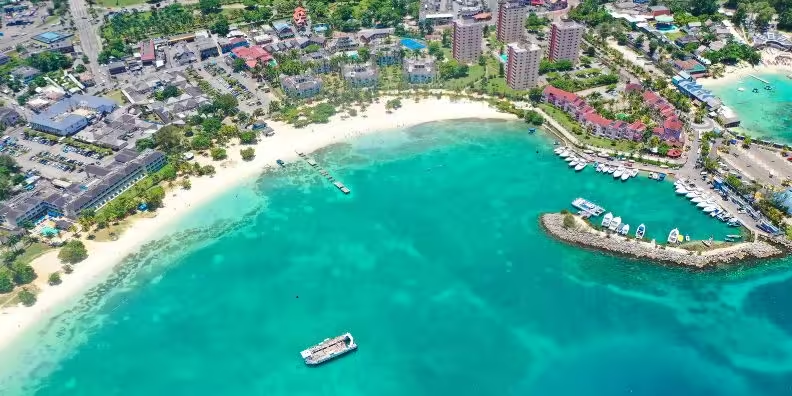
You don’t have to skip the resort to see the real Jamaica. Most visitors stay at an all-inclusive, and that’s fine. What makes the difference is what you do with the days you leave it: where you eat, how you get around, which part of the island you go to, and whether you stop long enough to talk to people. I’m Jamaican, and this is what I tell friends who want more than the pool and the buffet.
Leave the resort for at least a day
A week at a resort with no day out shows you the beach and very little else. One day away is enough to change the trip. Pick something Jamaicans do too: a river, a waterfall, a beach on a Sunday, a jerk center, a drive into the hills. Our guide to things to do in Jamaica sorts the open attractions by region, so you can find one close to where you’re staying.
Go with a licensed operator or driver if you don’t know the area. The UK government’s travel advice recommends Jamaica Tourist Board approved taxis and minibuses for excursions and airport transfers; their drivers carry photo ID and have a blue JTB sticker on the windshield.
Eat where Jamaicans eat
Resort kitchens do a decent jerk chicken, but it isn’t the same as jerk cooked slowly over pimento wood at a roadside jerk center. Growing up, Sunday dinner meant rice and peas with chicken or curry goat, and a cookshop lunch meant a full plate for very little money. These are the places to look for:
- Jerk centers. Pork and chicken over pimento wood, with festival or roast breadfruit. Scotchies, with outlets near Ocho Rios and in Montego Bay, is the easy one to reach from the north coast.
- Cookshops and patty shops. Look for the place with a lunchtime line of office workers and taxi drivers. Curry goat, oxtail, stew peas and brown stew fish are the standards.
- Fish by the sea. On the South Coast, fishing villages cook the day’s catch on the beach. Little Ochie at Alligator Pond is the best known.
- Fruit on the roadside. Mango in summer, June plum, guinep and naseberry in season, and a jelly coconut cut open in front of you.
If you’re not sure what something is, ask. People will tell you, and usually tell you how their grandmother made it.
Get around the way Jamaicans do
Knutsford Express
The easiest local way to travel between towns is Knutsford Express, the scheduled coach service many Jamaicans use for work and family trips. It has stations in Kingston, Montego Bay, Ocho Rios, Negril, Mandeville, Port Antonio and other towns, so you can do Montego Bay to Kingston or Negril to Ocho Rios without a private transfer.
Route taxis
Route taxis are shared cars that run a fixed route and pick up and drop off along the way. They’re how most Jamaicans without a car get around, and they’re cheap and often full. If you try one, use a licensed vehicle. The Transport Authority says licensed public passenger vehicles carry red PPV plates and a light blue Transport Authority sticker on the windshield, and licensed route taxis have “ROUTE TAXI” and their route painted on the front doors. Avoid unmarked cars offering rides, which Jamaicans call “robots”. The UK government also advises visitors to avoid buses at night.
My take: a short daytime hop in a route taxi with a Jamaican friend is a real slice of daily life. For anything longer, or if you have luggage or don’t know where you’re going, use Knutsford Express or a licensed driver.
Free Jamaica trip checklist
Want the printable version?
Get my free Jamaica trip checklist, then guides for the part of the island you're visiting.
Your checklist is ready
Download it below, then print it or tick the boxes on screen.
Go where the resorts aren’t
Most resorts sit on the north coast between Negril and Ocho Rios. Some of the most Jamaican parts of Jamaica are elsewhere:
- The South Coast. Treasure Beach, Black River and the St Elizabeth countryside have fishing villages, farms and very little mass tourism. See our South Coast guide for what’s there and what’s open.
- The hills. Inland Jamaica is mountains, rivers and small towns. Mandeville is a cool hill town, and the Cockpit Country is limestone forest. The Blue and John Crow Mountains are Jamaica’s first UNESCO World Heritage Site, but the government said in October 2026 that the 2025 hurricane damaged roads, trails and recreational facilities there, so ask before you plan a mountain day.
- Kingston. The capital is where the music, the art and a lot of the food come from. It isn’t a resort town, which is exactly why it’s worth a day or two.
Talk to people
Jamaicans are direct and like to talk. Say “good morning” when you walk into a shop or onto a bus; older people notice when you don’t. Ask your driver about the area you’re passing through, ask the cook what’s in the pot, ask the vendor where they’d go on a day off. A few words of Patois help too: our guide to common Jamaican Patois words and phrases covers the greetings you’ll hear most.
Two things locals will thank you for: ask before you photograph people, especially vendors and children, and say no politely when you don’t want to buy. A friendly “no, thanks” is enough.
Time your days like a local
- Go early. Mornings are cooler and quieter, and that’s when Jamaicans run errands and go to the beach before the heat.
- Sunday is family day. Public beaches and rivers fill up with families, music and food on Sunday afternoons. Go if you want the atmosphere, or pick a weekday for quiet.
- Watch the cruise schedule. Ocho Rios, Montego Bay and Falmouth are cruise ports. On ship days the big attractions near them are at their busiest, so locals go elsewhere.
- Allow for the roads. Distances look short on a map, but country roads are narrow and winding. Plan one main thing a day.
What locals wish visitors knew
- Ganja isn’t a free-for-all. The UK government’s advice says it’s illegal to smoke marijuana in Jamaica, with penalties for drug offences. Don’t buy from someone on the beach and don’t take any home.
- Not every friendly approach is friendship. Most Jamaicans you meet are just being sociable, but in the busiest tourist spots some people are selling. Be warm, and be clear.
- Tip the people who look after you. Drivers, guides and servers outside the resort often rely on tips.
- Spend locally. Money spent at local businesses outside the resort goes straight to Jamaican families, and it’s one of the most useful things a visitor can do.
Questions people ask
Can you see the real Jamaica if you stay at an all-inclusive?
Yes. Most of what makes the difference happens outside the gate: a day trip, a meal at a jerk center or cookshop, a coach ride between towns. Plan at least one day away from the resort.
Are route taxis safe for tourists?
Use only licensed ones. The Transport Authority says licensed vehicles have red PPV plates and a light blue Transport Authority sticker, and route taxis have “ROUTE TAXI” and their route on the doors. They’re best for short daytime trips; avoid unmarked cars offering rides.
How do Jamaicans travel between towns?
Many use Knutsford Express, a scheduled coach service with stations in Kingston, Montego Bay, Ocho Rios, Negril, Mandeville, Port Antonio and other towns. Others use route taxis and buses.
Where can I go in Jamaica away from the tourists?
The South Coast around Treasure Beach and Black River, the hill towns such as Mandeville, and Kingston all see far fewer resort visitors than the north coast.
Sources & updates
- Transport Authority (Jamaica): no authorised fare increase; use licensed PPVs with red plates and light blue sticker (Jamaica Observer, Apr 15, 2025) · checked
- Transport Authority: required markings and globes for route taxis and hackney carriages · checked
- Transport Authority: home page (illegally operated "robot" vehicles) · checked
- Knutsford Express: locations and opening hours · checked
- UK FCDO: Jamaica safety and security (taxis, buses at night, marijuana law) · checked
- JIS: support for restoration work at the Blue and John Crow Mountains World Heritage Site (Oct 2026) · checked
Update log
- — Rewritten as a researched guide; facts re-checked.
- — Trimmed hurricane references to where they change the advice
Spotted something out of date? Tell me and I’ll check it.