
On this page
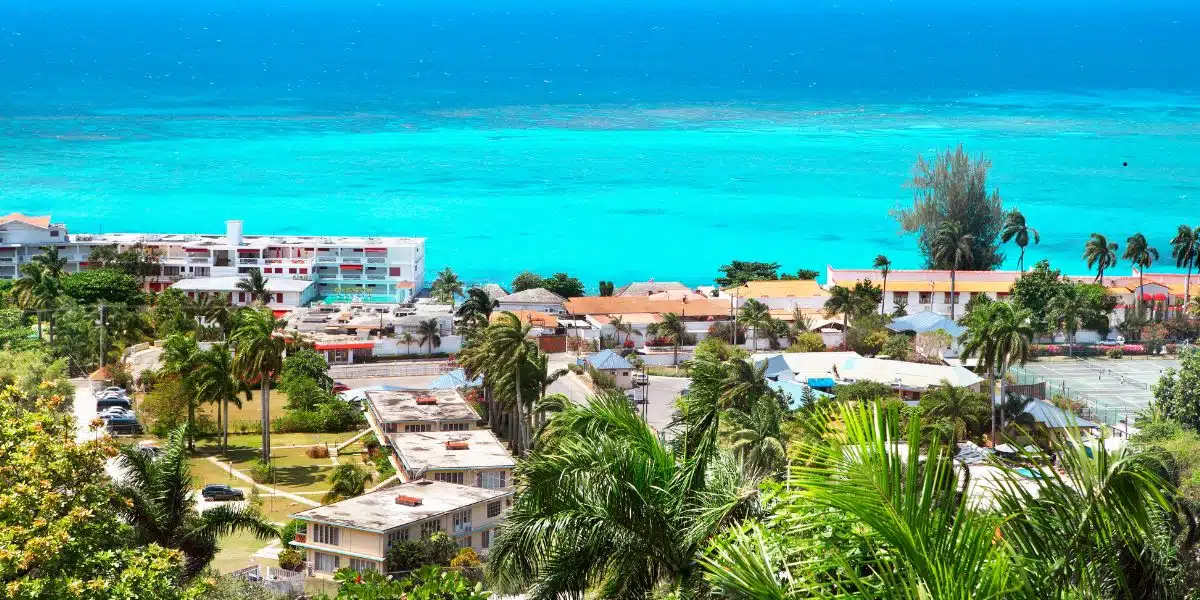
Jamaica is warm all year. What changes from month to month is the rain, the humidity and the hurricane risk, and those change a lot depending on which side of the island you’re on. This guide uses the Meteorological Service of Jamaica’s own climate data, the US National Hurricane Center’s season dates and NOAA satellite sea temperatures, with what growing up here teaches you about the weather on top.
How Jamaica’s weather works
Three things shape the weather here, according to the Met Service: the northeast trade winds, the mountains that run along the middle of the island, and the warm Caribbean Sea around it. The trades bring moisture in from the northeast, the mountains wring it out, and that’s why Portland in the northeast gets more than twice the rain of Kingston on the dry south side.
The year splits into two seasons. The Met Service describes the dry season as running from December to March, and the wet season from April to October, with an early wet season in April and May, a drop in rain around June and July, and then the main peak, with October usually the wettest month. In the northeast, the rain carries on through November to January, when the trade winds bring winter showers to Portland and St. Mary.
Rain in Jamaica usually means a heavy shower, often in the afternoon, and then sun again. Whole days of rain do happen, mostly when a tropical system is nearby, but even in the wet months most days have plenty of sunshine. Growing up, we’d watch the clouds build over the hills after lunch and know to get the clothes off the line.
Jamaica weather by month at a glance
Rainfall is the islandwide 30-year average (1991–2020) and highs are the 20-year average daytime highs (1996–2015) at Sangster airport in Montego Bay and Norman Manley airport in Kingston, all from the Meteorological Service of Jamaica. Sea temperatures are the 2016–2025 average for waters around Jamaica, from NOAA Coral Reef Watch satellite data.
| Month | Average rain (islandwide) | High, Montego Bay | High, Kingston | Sea | Season |
|---|---|---|---|---|---|
| January | 4.2 in (107 mm) | 86°F | 88°F | 82°F | Dry season |
| February | 3.0 in (75 mm) | 86°F | 87°F | 81°F | Dry season (driest month) |
| March | 3.9 in (98 mm) | 87°F | 88°F | 81°F | Dry season |
| April | 5.3 in (134 mm) | 89°F | 89°F | 82°F | Early wet season starts |
| May | 9.6 in (244 mm) | 90°F | 89°F | 83°F | Early wet season peak |
| June | 4.8 in (121 mm) | 91°F | 91°F | 84°F | Hurricane season; drier spell |
| July | 5.0 in (127 mm) | 92°F | 91°F | 84°F | Hurricane season; drier spell |
| August | 6.9 in (176 mm) | 92°F | 91°F | 85°F | Hurricane season; rain building |
| September | 8.8 in (224 mm) | 91°F | 91°F | 86°F | Hurricane season peak |
| October | 9.8 in (248 mm) | 90°F | 90°F | 86°F | Wettest month islandwide |
| November | 7.4 in (188 mm) | 88°F | 89°F | 84°F | Wet in the east; drying in the west |
| December | 5.0 in (126 mm) | 86°F | 88°F | 83°F | Dry season starts |
The islandwide rainfall figure is pulled up by Portland, the wettest parish by far. The resort areas on the north and west coasts get less than the average in most months; see the regional section below for each area.
Month by month
January
Dry season and the most comfortable heat of the year: average highs around 86°F in Montego Bay, with cooler evenings and nights up in the hills. The exception is the northeast. January averages about 16 inches (413 mm) of rain in Portland, so expect showers if you’re heading to Port Antonio. It’s peak season for visitors. On January 6, the Maroons of Accompong in St. Elizabeth hold their annual celebration.
February
The driest month islandwide, at about 3 inches (75 mm) on average, and Kingston averages just 32 mm. Sea temperatures dip to their lowest, around 81°F, which still feels warm to most visitors. February is Reggae Month in Jamaica, and Bob Marley’s birthday on February 6 brings events around the island. Ash Wednesday is a public holiday, and its date moves each year.
March
Still dry and sunny, with highs creeping up to around 87°F in Montego Bay. A good month for hiking in the Blue Mountains before the rains start. Spring break brings more visitors to the resorts in the second half of the month.
April
The Met Service counts April as the start of the early wet season, and showers pick up, especially in the west and in the hills of Manchester and St. Elizabeth. Most of the month is still sunny on the coasts. Good Friday and Easter Monday are both days off for the whole country, and Easter is a big family and church weekend for Jamaicans.
May
The early rainy season peaks. May averages about 9.6 inches (244 mm) islandwide and is one of the wettest months in Negril and Hanover, which average 313 mm. Showers tend to come in heavy bursts. Highs reach about 90°F and the humidity rises. National Labour Day, May 23, is a public holiday when communities take on clean-up and repair projects.
June
Hurricane season starts on June 1. Rainfall drops back to about half of May’s in most parishes, so June and July are often a pleasant window between the two wet spells. Highs are around 91°F, and the sea warms to about 84°F.
July
Hot, around 92°F in Montego Bay, and fairly dry on the north coast; St. Ann averages under 90 mm. Westmoreland is the exception, with about 213 mm, as afternoon thunderstorms build over the western hills. Reggae Sumfest, the big music festival in Montego Bay, is usually held in July; check the organizer for dates.
August
The hottest month, with average highs around 92°F in Montego Bay and sea temperatures about 85°F. Rain builds again and the hurricane season heads toward its peak. Emancipation Day (August 1) and Independence Day (August 6) are each a public holiday, and the week between them is full of celebrations.
September
The statistical peak of the Atlantic hurricane season is September 10, according to the National Hurricane Center. Rain is heavy across the island, around 8.8 inches (224 mm) on average, and Kingston’s wettest month on average is September (250 mm). The sea is at its warmest, about 86°F. It’s the quietest month for visitors.
October
The wettest month islandwide, at about 9.8 inches (248 mm) on average, and still deep in hurricane season, so late-season storms are a real possibility. National Heroes Day, the third Monday in October, is a public holiday.
November
The west and south start drying out; Montego Bay averages about 124 mm, well below October’s 217 mm. The northeast does the opposite: November is Portland’s wettest month, averaging 538 mm. Hurricane season ends on November 30, and late-season storms are possible in the first half of the month.
December
The dry season returns to most of the island, highs settle back to around 86°F in Montego Bay, and the evenings are pleasant. Portland and St. Mary stay showery. Christmas is the busiest and most festive time of year: Grand Market on Christmas Eve, church, family and plenty of food. Christmas Day and Boxing Day are both days off for the whole country. For Christmas traditions and tips for the holiday rush, see Jamaica in December.
Free Jamaica trip checklist
Want the printable version?
Get my free Jamaica trip checklist, then guides for the part of the island you're visiting.
Your checklist is ready
Download it below, then print it or tick the boxes on screen.
Weather by region
The figures below are 30-year parish averages (1991–2020) from the Met Service. Parish averages include the hills, which get more rain than the coast, so the beach is usually drier than these numbers suggest.
Montego Bay and the northwest
St. James averages 1,635 mm a year. Dry from December to April (55 to 114 mm a month), wettest in May, September and October (about 217 to 229 mm). A reliable winter-sun choice. See the Montego Bay guide.
Negril and the west
Hanover (2,181 mm a year) and Westmoreland (1,936 mm) are wetter than Montego Bay, with rain spread from May right through October; Hanover averages over 200 mm in every month from May to October. The flip side is dry, sunny winters, with January to March averaging 57 to 90 mm. The sunsets are best in the dry season too. See the Negril guide.
Ocho Rios and St. Ann
St. Ann (1,623 mm a year) has the opposite pattern to the west in summer: June and July are among its driest months (under 90 mm), and it gets more winter rain than Montego Bay, with about 132 mm in January. See the Ocho Rios guide.
Portland and the northeast
The wettest parish in Jamaica, averaging 3,614 mm a year. That rain is why Portland is so green and its rivers and waterfalls run so well. The wettest months are November to January (413 to 538 mm); the driest is June (143 mm). See the Portland guide.
Kingston
The driest parish, at 1,377 mm a year, with hot, dry winters (32 to 48 mm a month from January to March) and its rain concentrated in September and October. Kingston sits in the rain shadow of the Blue Mountains, which are much cooler at the top and often in cloud. See the Kingston guide.
South Coast
St. Elizabeth averages 1,737 mm a year, but most of that falls on the hills inland. Treasure Beach and the coast around it are among the driest places on the island; locals will tell you the area can go weeks without rain in the dry season. The parish’s wettest months are May and September to October. See the South Coast guide.
Hurricane season
The Atlantic hurricane season runs from June 1 to November 30, according to the US National Hurricane Center, with most activity between mid-August and mid-October and a peak on September 10. Jamaica doesn’t get a hurricane every year, but tropical storms bring heavy rain and flooding more often. The US State Department notes intense rainfall can cause flash flooding and washed-out roads, most often in May and June and from September to November, and landslides in the Blue Mountains and other hills.
Late storms can be the big ones: Hurricane Melissa made landfall in Westmoreland on October 28, 2025 as a Category 5, the strongest on record to hit Jamaica, according to the National Hurricane Center.
If you travel between June and November:
- Buy travel insurance that covers hurricanes, and buy it before a storm is named.
- Book flights and hotels you can change, and check your resort’s hurricane policy. My Jamaica hurricane season guide covers resort policies and insurance in more detail.
- Follow the Meteorological Service of Jamaica and the National Hurricane Center in the week before you fly.
- If a storm is coming, do what your hotel and local authorities say. Jamaican resorts are used to this.
Sea temperatures
The sea around Jamaica is warm enough to swim in comfortably all year. NOAA Coral Reef Watch satellite data for 2016 to 2025 averages about 81°F (27°C) in February and March, the coolest months, and about 86°F (30°C) in September and October, the warmest. Winter swells and windy days can make the north coast choppy; the west end of Negril and the south coast are often calmer.
When to go
- Best weather: December to April, the dry season, when the heat is easiest. It’s also the busiest and most popular time to visit, so book early for Christmas, New Year and Easter.
- Good value with decent weather: late April to mid-December, away from Easter and Christmas, with June and July often the best of it, between the two wet spells.
- Quietest: September and October, the wettest months and the peak of hurricane season. Fine for flexible travelers with insurance, but not the time for a once-in-a-lifetime wedding date.
- By region: for dry winter sun, Montego Bay, Negril, Kingston or the south coast. For Portland, June to September are the least rainy months, though no month there is truly dry.
To weigh the weather against crowds, prices and festivals, see the best time to visit Jamaica.
What to pack for the weather
- Light cotton or linen clothes, and a light layer for air-conditioned rooms and winter evenings
- A light rain jacket or umbrella from April to November, and any time in Portland
- A warm layer if you’re going up the Blue Mountains, especially for a sunrise hike
- Reef-safe sunscreen, a hat and sunglasses: the sun is strong year-round
- Insect repellent, especially in the wet months
Planning the rest of the trip? Check the passport and entry rules before you book; my free Jamaica trip checklist puts documents, money and packing in one printable list.
Questions people ask
What is the best month to go to Jamaica?
For weather, December to April, when it’s dry and the heat is easiest; February is the driest month. For fewer crowds with decent weather, June and July often sit in a drier gap between the two rainy spells.
What is the rainy season in Jamaica?
The Met Service describes the wet season as April to October, with an early peak in May, a dip around June and July and the main peak in October. The northeast, Portland and St. Mary, is also wet from November to January.
When is hurricane season in Jamaica?
June 1 to November 30, the official Atlantic season. Most activity falls between mid-August and mid-October, with the statistical peak on September 10.
Is the sea warm in Jamaica in winter?
Yes. NOAA satellite data for 2016–2025 averages about 81–83°F (27–28°C) from December to March, and about 86°F in September and October.
Which part of Jamaica has the best weather?
Kingston and the south coast around Treasure Beach are the driest. Montego Bay and Negril are reliably dry in winter. Portland is the wettest part of the island, which is why it’s so lush.
Sources & updates
- Meteorological Service of Jamaica: Our Data (20-year mean temperatures 1996–2015; 30-year mean rainfall by parish 1991–2020) · checked
- Meteorological Service of Jamaica: Our Climate (climate influences) · checked
- JIS: Met Service on the wet and dry seasons (March 19, 2026) · checked
- US National Hurricane Center: Tropical cyclone climatology (season dates and peak) · checked
- US National Hurricane Center: Tropical Cyclone Report, Hurricane Melissa (updated May 19, 2026) · checked
- NOAA Coral Reef Watch: Jamaica regional virtual station SST data (2016–2025 averages calculated from the daily series) · checked
- US State Department: Jamaica travel guidance (weather and natural disasters) · checked
- Jamaica Tourist Board: travel alerts (airports and ports after Hurricane Melissa) · checked
- UK FCDO: Jamaica travel advice (Hurricane Melissa recovery) · checked
- JIS: Jamaica's public holiday dates and rules · checked
Update log
- — Rewritten as a researched guide; facts re-checked.
- — Removed repeated advice
- — Trimmed hurricane references to where they change the advice
Spotted something out of date? Tell me and I’ll check it.