On this page
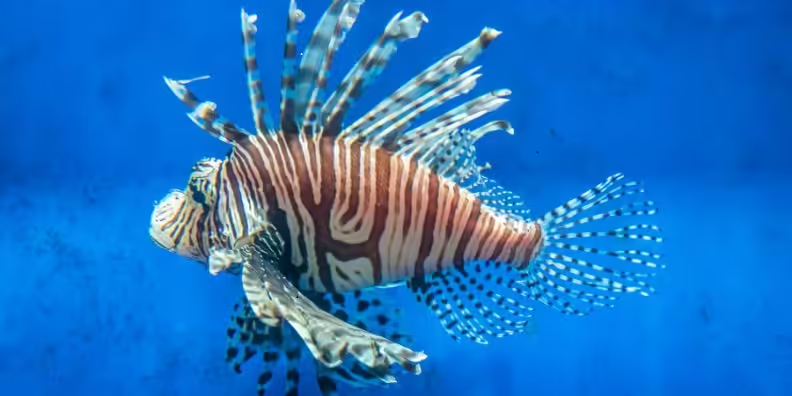
The lionfish is the most beautiful problem on Jamaica’s reefs. It’s striped, slow and covered in long fan-like spines, and it doesn’t belong here. It’s also very good to eat, which is how Jamaica decided to fight it. Here’s why lionfish matter, whether they’re poisonous, what to do if you get stung, and how to eat them.
Why lionfish are a problem in Jamaica
Lionfish are native to the Indo-Pacific. NOAA says they were first reported in South Florida in 1985, possibly released from home aquariums, and spread through the Atlantic and Caribbean from there. The first lionfish in Jamaica was officially confirmed by the National Environment and Planning Agency, known as NEPA, in April 2008, at a dive site in Runaway Bay, St Ann, and by 2010 NEPA said they had spread around the entire island.
They do damage for a few reasons, according to NOAA:
- They’re top predators that eat more than 50 species of fish and compete with snapper and grouper for food and space.
- Scientists fear they’ll kill off helpful fish like the algae-eating parrotfish, letting seaweed take over the reef.
- They have no known predators here and breed all year; a mature female releases about two million eggs a year.
At their worst, JIS reported, Jamaican reefs had up to 250 lionfish per hectare, a threat to the small fish, shrimp and crabs they eat and to the fishermen who depend on the reef.
How Jamaica fought back: eat it to beat it
NEPA and the University of the West Indies’ Discovery Bay Marine Lab led a National Lionfish Project, funded through a regional invasive-species program. Its best-known result was the “Eat it to Beat it” campaign, which encouraged fishermen to catch lionfish and Jamaicans to eat them. By April 2014, NEPA reported a 66% drop in lionfish sightings, with numbers in frequently visited areas down to about 80 per hectare.
That’s progress, not victory. The regional invasive-species network says it’s very unlikely lionfish will ever be wiped out of Jamaica or the Caribbean, so the job now is to keep numbers down. Every lionfish on a plate is one fewer on the reef.
Free Jamaica trip checklist
Want the printable version?
Get my free Jamaica trip checklist, then guides for the part of the island you're visiting.
Your checklist is ready
Download it below, then print it or tick the boxes on screen.
Are lionfish poisonous?
No, and this is the misunderstanding that kept many Jamaicans away from them for years. Lionfish are venomous, not poisonous. The venom is in the spines, not the meat. NOAA says the dorsal, anal and pelvic spines are venomous, and once they’re cut off with kitchen shears or clippers, a lionfish can be cleaned like any other fish.
A lionfish can’t shoot its spines. You only get stung by touching or grabbing one, so the rule in the water is simple: look, don’t touch.
If you get stung
NOAA’s first aid advice:
- Get medical attention promptly.
- Check for and remove any obvious pieces of spine left in the wound.
- Put the wound in hot water, as hot as you can stand without scalding, until the pain eases.
Pain and swelling are the usual symptoms; NOAA says that in extreme cases a sting can cause skin necrosis or paralysis. Tell your hotel or dive operator straight away, and don’t try to tough it out.
What lionfish taste like
NOAA describes lionfish as a delicious, delicately flavored white fish and compares the taste and texture to snapper or hogfish. That’s about right. Jamaicans cook it the same ways we cook snapper: fried crisp and eaten with festival or bammy, steamed with okra and pepper, or as escovitch with pickled onions, carrots and scotch bonnet.
There isn’t much meat on a small one, so they’re often cooked whole rather than filleted. If you’re cleaning your own, wear puncture-proof gloves, hold the fish by the head and cut off all the spines before anything else.
Where to find lionfish
- On the plate: lionfish depends on what the fishermen brought in that day. Ask at seafood spots and fishing beaches rather than expecting it on a printed menu. Down on the south coast, places like Little Ochie in Alligator Pond are where I’d ask. For more ideas, see my guide to restaurants for authentic Jamaican food.
- On the reef: you’re likely to see them while snorkeling or diving, usually hanging still under ledges. My guide to snorkeling in Jamaica covers where to go.
- On a fishing trip: lionfish are the one catch nobody minds you keeping. See my guide to fishing in Jamaica for the rules.
Questions people ask
Are lionfish poisonous to eat?
No. Lionfish are venomous, not poisonous: the venom is in the spines, not the meat. NOAA says that once the dorsal, anal and pelvic spines are cut off, the fish can be cleaned and cooked like any other.
What should I do if a lionfish stings me?
Get medical attention promptly. NOAA advises removing any obvious pieces of spine and soaking the wound in hot water, as hot as you can stand without scalding, until the pain eases.
Why are lionfish bad for Jamaica's reefs?
They’re invasive predators from the Indo-Pacific with no known predators here. They eat many reef fish, compete with snapper and grouper, and breed all year.
Can I order lionfish in Jamaican restaurants?
Sometimes. It depends on the day’s catch, so ask at seafood spots and fishing beaches rather than expecting it on a printed menu.
Will I see lionfish while snorkeling in Jamaica?
Quite possibly, usually resting under ledges on the reef. Look but don’t touch: you only get stung if you handle one.
Sources & updates
- NOAA National Ocean Service: What is a lionfish? · checked
- NOAA National Marine Sanctuaries: Lionfish from sea to table (handling, first aid, cleaning) · checked
- NEPA/MTIASIC: Outline of the National Lionfish Pilot (first confirmed sighting, April 2008) · checked
- JIS: Lionfish population down, NEPA reports 66% drop in sightings (Apr 2014) · checked
- Caribbean Invasive Alien Species Network: The invasive lionfish in Jamaica · checked
Update log
- — Rewritten as a researched guide; facts re-checked.
- — Moved source citations out of the text
Spotted something out of date? Tell me and I’ll check it.