On this page
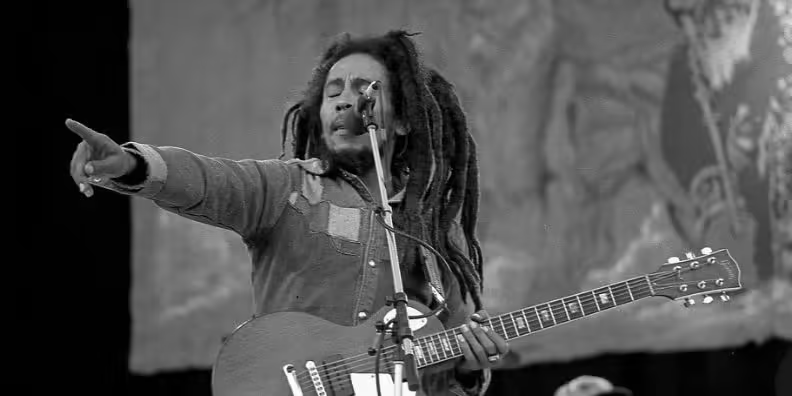
Ask anyone abroad to name a Jamaican and most will say Bob Marley. More than four decades after he died, his face is on murals, T-shirts and flags all over the island, and his songs still play in taxis, bars and churchyards. For Jamaicans he’s more than a famous musician. He’s the country boy from St Ann who came up in Trench Town, took Jamaican music to the world, and made a lot of people outside Jamaica take Rastafari and the struggles of poor people seriously. This is how he did it, what he changed at home, and where to see his story when you visit.
From Nine Mile to Trench Town
Robert Nesta Marley was born on February 6, 1945, in Nine Mile, a farming district in the hills of St Ann. His mother was Cedella Malcolm, later Cedella Booker, and his father was Captain Norval Marley, a white man attached to a British regiment, who seldom saw his son, according to JIS, the Jamaica Information Service. In the 1950s his mother moved with him to Kingston and settled in Trench Town, an inner-city community in the west of the city.
Trench Town made him. It was there, in the singer Joe Higgs’s music classes for young people, that he became friends with Neville Livingston, later Bunny Wailer, and Peter Tosh. In 1963 they formed the Wailing Wailers with Junior Braithwaite, Beverley Kelso and Cherry Smith, recording for Clement “Coxsone” Dodd at Studio One. Their single “Simmer Down” spent two months on the Jamaican chart. In February 1966 Bob married Rita Anderson.
Taking reggae to the world
Marley’s career runs through three Jamaican styles: ska, rocksteady and reggae, which JIS calls his most influential musical form. The Wailers’ international break came in 1971, when they signed with Chris Blackwell’s Island Records. Their first album for Island, Catch a Fire, came out in 1973, followed by Burnin’. After Tosh and Bunny Wailer left to go solo, the group became Bob Marley & the Wailers, with Rita Marley, Judy Mowatt and Marcia Griffiths singing harmony.
The rest of the 1970s was his peak: Natty Dread, Live, Rastaman Vibration, Exodus, Kaya, Babylon by Bus, Survival and, in 1980, Uprising. JIS notes that Exodus (1977) stayed on the UK album chart for 56 weeks in a row and was later named album of the century by Time magazine. Legend, released after his death, is the record most people abroad grew up with.
Free Jamaica trip checklist
Want the printable version?
Get my free Jamaica trip checklist, then guides for the part of the island you're visiting.
Your checklist is ready
Download it below, then print it or tick the boxes on screen.
Faith and message
You can’t separate Bob’s music from Rastafari. JIS describes his faith and his views on social issues as the cornerstone of his work, from “Jah Live” to “One Love”. He was a member of the Twelve Tribes of Israel, one of the Rastafari houses, in the Tribe of Joseph. For many people around the world, his songs were the first time they heard about Haile Selassie, Marcus Garvey or the idea of Africa as home. Our guide to understanding Rastafari explains the faith behind the lyrics.
What Jamaicans hear in his songs is our own life: sufferers in the ghetto (“Concrete Jungle”, “Them Belly Full”), standing up for your rights (“Get Up, Stand Up”), and love and unity even when things are hard. “Redemption Song” quotes Marcus Garvey’s call to free ourselves from mental slavery, which tells you how close the music and the history are.
The One Love Peace Concert
The 1970s were violent years in Kingston, with gangs tied to the two main political parties fighting street by street. In December 1976 gunmen shot Marley at his home on Hope Road, and he moved to England. In 1977, enforcers from both sides asked him to come back and headline a peace concert. On April 22, 1978, at the National Stadium in Kingston, he called Prime Minister Michael Manley and Opposition Leader Edward Seaga onto the stage during “Jamming” and held their hands together above his head, as the Jamaica Observer recalls.
It’s one of the most famous images in Jamaican history. It didn’t end the violence, and honesty matters here: the Observer records more than 800 murders in the 1980 election year. But Jamaicans remember that night as proof that music could reach people that politics couldn’t.
What he changed at home
- Jamaica’s image abroad. For millions of people, Jamaica means reggae, and reggae means Bob. The island’s tourism, its national brand and its music industry still benefit from that.
- Respect for Rastafari. When he started out, Rastas were looked down on and harassed in Jamaica. His fame helped change how the world, and many Jamaicans, saw the faith.
- National honors. In 1981 he received the Order of Merit, then Jamaica’s third-highest honor, and when he died in May 1981 the government gave him an official funeral, according to JIS.
- Reggae Month and UNESCO. JIS says his music inspired Reggae Month, celebrated every February, the month of his birthday. In November 2018 reggae music of Jamaica was added to UNESCO’s Representative List of the Intangible Cultural Heritage of Humanity, the Ministry of Culture announced.
- A path for others. Bob opened doors that Peter Tosh, Bunny Wailer, Burning Spear and later generations of reggae and dancehall artists walked through.
One thing Jamaicans will tell you, gently: Bob is the beginning of Jamaican music, not the whole of it. If you love his songs, listen to Toots and the Maytals, Jimmy Cliff, Tosh and Bunny, and then to what young Jamaican artists are making now. Streaming a station from home is the easiest way; my guide to Jamaican radio stations shows how. And if you hear “One Love” as a soft holiday jingle, listen again to the rest of the catalog. A lot of it is angry, political and deeply religious.
Where to see Bob Marley’s story in Jamaica
Two places tell his story best, at opposite ends of his life.
- The Bob Marley Museum, Kingston. His former home and studio at 56 Hope Road, the house where he was shot in 1976, now a museum with guided tours. Our Bob Marley Museum guide has current hours and tickets, and our Kingston guide covers the rest of the city.
- Nine Mile, St Ann. The family property where he was born and where he is buried, in a mausoleum beside his mother. It’s run as 9 Mile Reggae Land by his brother, Richard Booker, with guided tours of the house and mausoleum. Our Nine Mile guide covers tours, hours and the road up from Ocho Rios.
If you can do both, do Nine Mile first and the museum second. You’ll see where he started and how far he went.
Questions people ask
Where was Bob Marley born?
In Nine Mile, a district in the hills of St Ann, on February 6, 1945. He moved to Trench Town in Kingston with his mother in the 1950s.
Why is Bob Marley a national icon in Jamaica?
He took reggae, and Jamaica, to the world, and helped change how people saw Rastafari. Jamaica gave him the Order of Merit in 1981 and an official funeral when he died that May, according to JIS, and his music inspired Reggae Month, held every February, the month of his birthday.
Was Bob Marley a Rastafarian?
Yes. His Rastafari faith was the heart of his music, and he was a member of the Twelve Tribes of Israel, one of the Rastafari houses.
What was the One Love Peace Concert?
A concert at the National Stadium in Kingston on April 22, 1978, held to calm political violence. Marley brought Prime Minister Michael Manley and Opposition Leader Edward Seaga on stage and joined their hands.
Can you visit Bob Marley's house in Jamaica?
Yes. His Kingston home at 56 Hope Road is the Bob Marley Museum, with guided tours, and his birthplace at Nine Mile in St Ann offers tours too. Check each one’s current hours before you go.
Sources & updates
- Jamaica Information Service: Famous Jamaicans, Robert Nesta Marley · checked
- Jamaica Observer: The One Love Peace Concert (Jul 2022) · checked
- Ministry of Culture, Gender, Entertainment and Sport: reggae inscribed on the UNESCO Representative List (Nov 29, 2018) · checked
- RE:Online (Culham St Gabriel's): diversity within Rastafari (Twelve Tribes; Bob Marley, Tribe of Joseph) · checked
- Bob Marley Museum: home museum tour, 56 Hope Road · checked
- 9 Mile Reggae Land: Bob Marley Mausoleum · checked
- Office of the Prime Minister: Statement to Parliament on the aftermath of Hurricane Melissa (Nov 2025) · checked
Update log
- — Rewritten as a researched guide; facts re-checked.
- — Swapped the FAQ "Where is Bob Marley buried?" (the Nine Mile page's) for why he is a national icon.
- — Moved source citations out of the text
- — Added internal links to related guides
- — Trimmed hurricane references to where they change the advice
Spotted something out of date? Tell me and I’ll check it.