
My local take
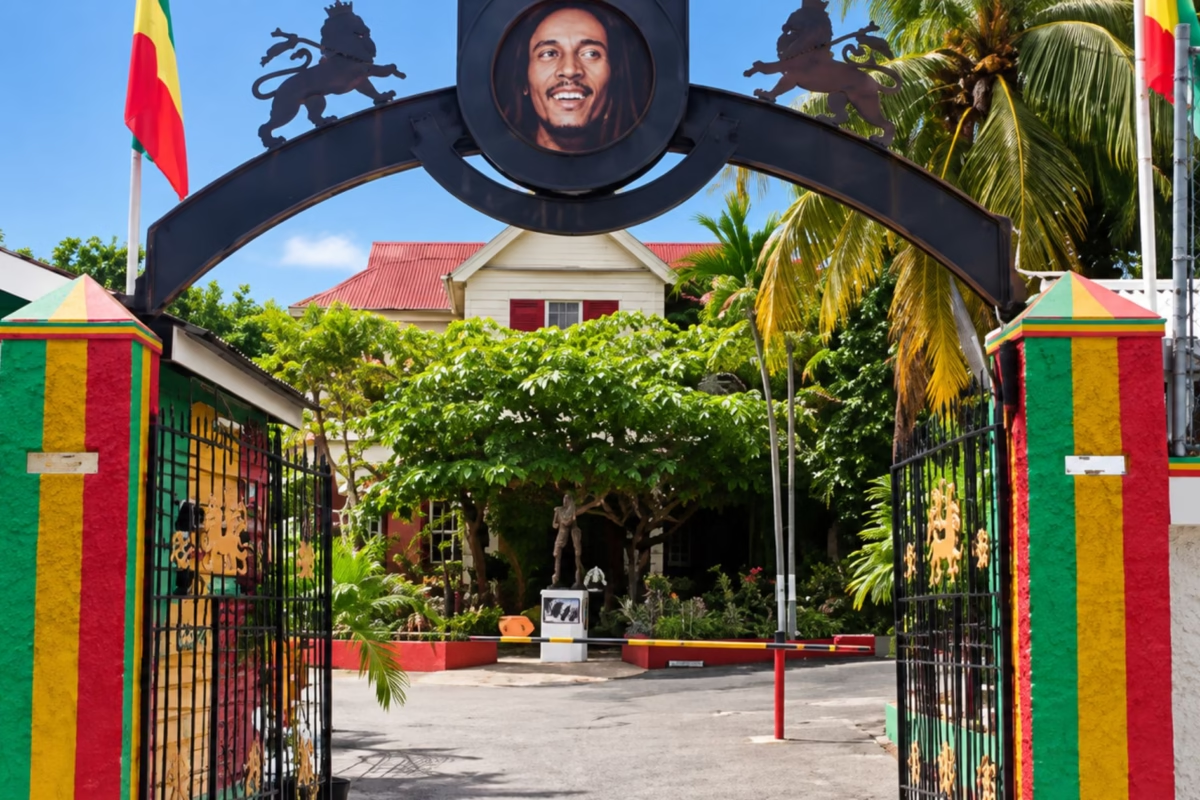
This is the house on Hope Road that Bob Marley bought in 1975 and lived in until he died in 1981. Rita Marley later turned it into a museum, and it is the main reason many visitors make the trip to Kingston at all. You see it on a guided tour of the rooms kept as they were when he lived here. It’s also the house where Marley survived an assassination attempt in 1976, and that story is part of how Jamaicans think about this address.
It suits anyone who grew up on the music, and it works for older children too. It’s a tour, not a concert or a party, so set your expectations there. Compared with Tuff Gong, the studio on Marcus Garvey Drive, this is the personal side of the story; Tuff Gong is the working side. My take: if you only have one Kingston morning, spend it here.
Pair it with Devon House, the Stiebel mansion further down Hope Road, or the National Gallery of Jamaica downtown. For the rest of the city, see our Kingston guide.
How to get there
The museum is at 56 Hope Road in uptown Kingston, a short taxi ride from New Kingston and Half Way Tree. Devon House is at 26 Hope Road, a little over a kilometer away on the same road (map distance), so the two fit easily into one outing. From Norman Manley International Airport, allow roughly 30 to 45 minutes by taxi, more at rush hour.
From Ocho Rios, the North-South Highway brings you to Kingston in roughly 1.5 to 2 hours. From Montego Bay, it’s a long day: roughly three hours or more each way by road, so it’s better done as an overnight in Kingston or on an organized tour. If you’re also booking the Tuff Gong studio tour, note that the museum says transport between the two sites is not included, though staff can help you find a reputable taxi.
Without a car: In Kingston, take a licensed taxi (red PPV plates) or ask your hotel to call one. From the north coast, an organized tour or a licensed transfer is simpler than public transport.
What to expect
Every visit is a guided tour. The guides take you through the grounds, the main house, the exhibition hall and the theater. The museum lists a life-size 3D hologram of Marley from the One Love Peace Concert, his Grammy Lifetime Achievement award, his studio and bedroom, his clothing, a large collection of gold and platinum records, and costumes worn by the I-Threes. The air-conditioned theater shows live performances, and the tour includes a 20-minute film.
The museum describes the home tour as about 75 minutes including the film, and its booking page allows an hour and a half. Tours run every hour from 10 am to 4 pm, Monday to Saturday, and you book a time online. Prices on the booking page are in US dollars.
After the tour there’s the One Love Café, which serves ital (Rastafarian-style) dishes and juices and is open Monday to Saturday from 9:30 am to 4:30 pm, plus a gift shop and a record shop with vinyl and CDs. If you want more, the Combo “One Love” Tour adds the Tuff Gong studio on Marcus Garvey Drive on the same day for US$40 per adult and US$24 per child, and the studio tour on its own starts at US$20.
Local tips
Book a time on the official site before you go. Tours start on the hour, and the last one listed starts at 4 pm.
Don’t plan it for a Sunday. The museum is closed on Sundays and on some major public holidays, so check the calendar if your trip falls on a Jamaican public holiday.
If you want the full story, do the combo with Tuff Gong, and line up your taxi between the two sites in advance.
Eat at the One Love Café after the tour, or take a short taxi ride down Hope Road to Devon House for patties and ice cream.
Wear comfortable walking shoes and bring sunscreen and water. The museum itself recommends both, and part of the tour is outdoors.
Before you go
- The house has two floors with narrow stairs. The museum says the tour is only partly accessible, for guests with collapsible wheelchairs and walkers, and the stairs limit access to the upper floor.
- It’s a guided group tour on a set schedule. You join a group rather than wander at your own pace.
- Kingston traffic on Hope Road can be heavy at rush hour, so leave a buffer before your booked tour time.
Free trip checklist
Planning a trip here?
Get my printable Jamaica trip checklist, then local guides to Kingston.
Your checklist is ready
Download it below, then print it or tick the boxes on screen.
Questions people ask
How much does the Bob Marley Museum tour cost?
On October 8, 2026, the official booking page listed the home tour at US$25 for adults (13 and over) and US$12 for children aged 4 to 12, with children 3 and under free. The combo with the Tuff Gong studio was US$40 for adults and US$24 for children.
Is the Bob Marley Museum open on Sundays?
No. The museum says tours run Monday to Saturday, every hour from 10 am to 4 pm, and it is closed on Sundays and some major public holidays.
How long is the Bob Marley Museum tour?
The museum describes it as about 75 minutes, including a 20-minute film in the theater, and its booking page allows an hour and a half. Add time for the café and gift shop.
Is the Bob Marley Museum wheelchair accessible?
Only partly. The museum says the tour suits guests with collapsible wheelchairs and walkers, but the house is two stories with narrow stairs, which limits access to the upper floor.
Sources & updates
- Bob Marley Museum (official site): Bob Marley Home Tour · checked
- Bob Marley Museum: home page (history, theater, shops) · checked
- Bob Marley Museum: official booking calendar, home tour (October 2026 availability, USD prices) · checked
- Bob Marley Museum: Combo "One Love" Tour · checked
- Bob Marley Museum: One Love Café · checked
- Bob Marley Museum: Museum Attractions (gift and record shops) · checked
- Bob Marley Museum: Contact & Location (Hope Road and Tuff Gong addresses) · checked
- Wikipedia: Bob Marley Museum (1976 assassination attempt, history) · checked
- OpenStreetMap: Bob Marley Museum (map location) · checked
Update log
- — Rewritten as a researched guide; facts re-checked.
- — Removed repeated advice
- — Trimmed hurricane references to where they change the advice
Spotted something out of date? Tell me and I’ll check it.